
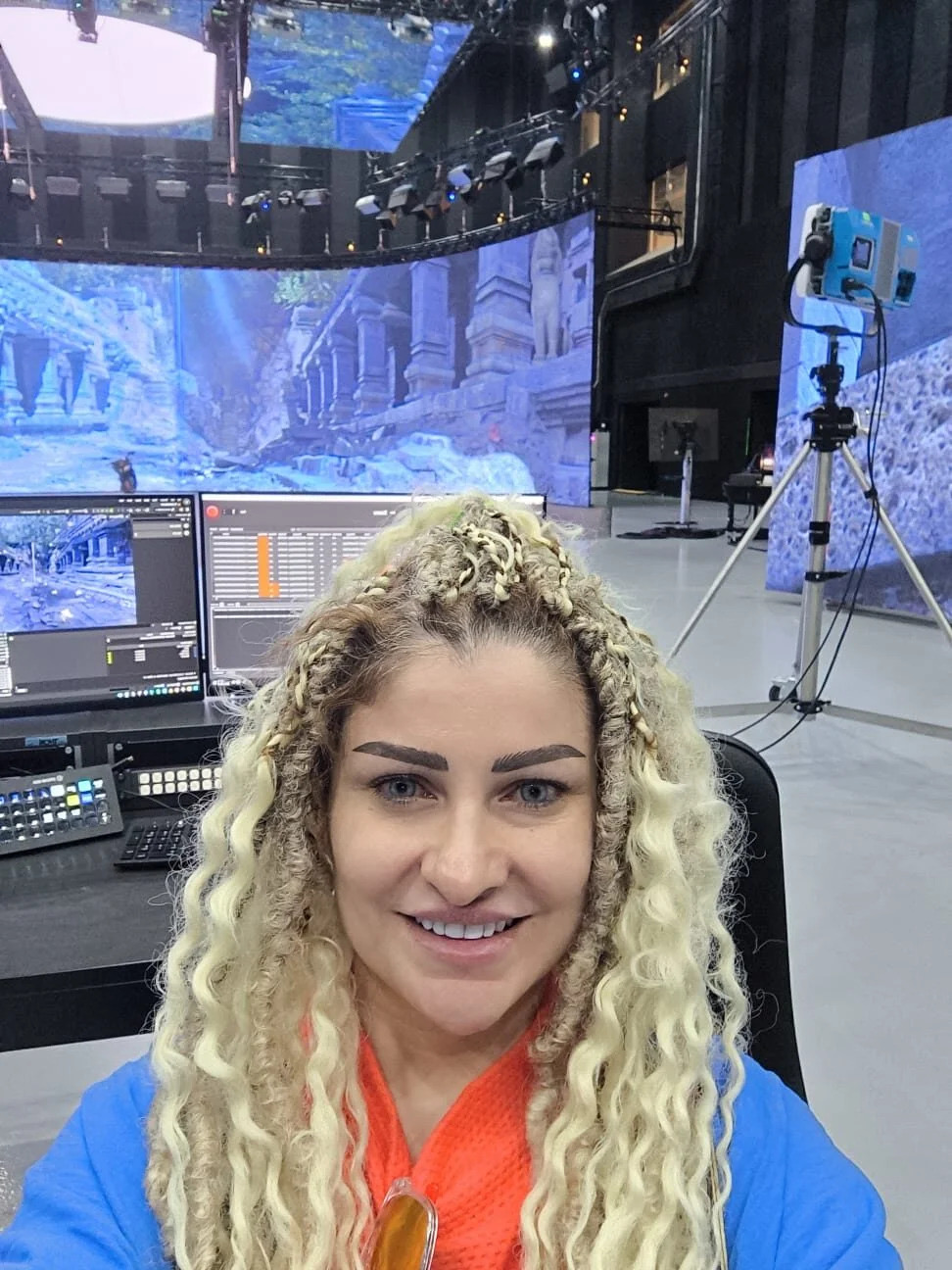
From the Jordanian capital Amman, where the foundations of ambition and entrepreneurial thinking are first shaped, to the heart of Saudi Arabia’s capital Riyadh—now witnessing one of the fastest digital transformations in the region—emerges a notable professional journey in modern media, led by Jordanian consultant and trainer Sandra Qawar, whose name has become increasingly associated with media development, youth empowerment, and digital content innovation.
Qawar is regarded as one of the professionals contributing to the advancement of new media concepts, not only through training, but through a practical vision focused on building real capabilities among young talents and preparing them for a rapidly evolving media market—one that demands creativity, technical proficiency, and a deep understanding of modern communication platforms.
Within this role, she has contributed to training approaches that emphasize the shift from media consumption to content creation, by developing critical thinking skills and the ability to produce meaningful and professional digital content aligned with the ongoing transformations in the global media landscape.
Her involvement in development initiatives and programs such as “Build” is seen as an extension of a practical approach aimed at supporting young talent and creating modern learning environments that foster innovation and open pathways for a new generation of content creators capable of competing regionally and internationally.
Her professional experience highlights a strong focus on bridging theoretical knowledge with practical application, which has positioned her work within the concept of “media empowerment”—not merely transferring knowledge, but creating a lasting impact on individuals’ capabilities and career trajectories.
This extension from Jordan to Saudi Arabia reflects a broader Arab media movement, where professional expertise plays a central role in accelerating digital transformation and strengthening the region’s presence in new media and innovation fields. Within this context, such efforts represent a model of specialized work that aligns with the evolving media industry and responds to the demands of a future built on knowledge, technology, and creativity.
Ultimately, Qawar’s professional presence forms part of a wider transformation in Arab media, where attention is increasingly directed toward building more professional systems capable of competing and generating real influence in the global digital space.