Camel racing has undergone significant transformation in recent years, with larger festivals, growing investment, stronger governance and increasing public interest helping modernise one of the region’s oldest sports. As that evolution continues, attention is increasingly turning towards what comes next – and how data, technology and new forms of fan engagement could help shape the sport’s future.
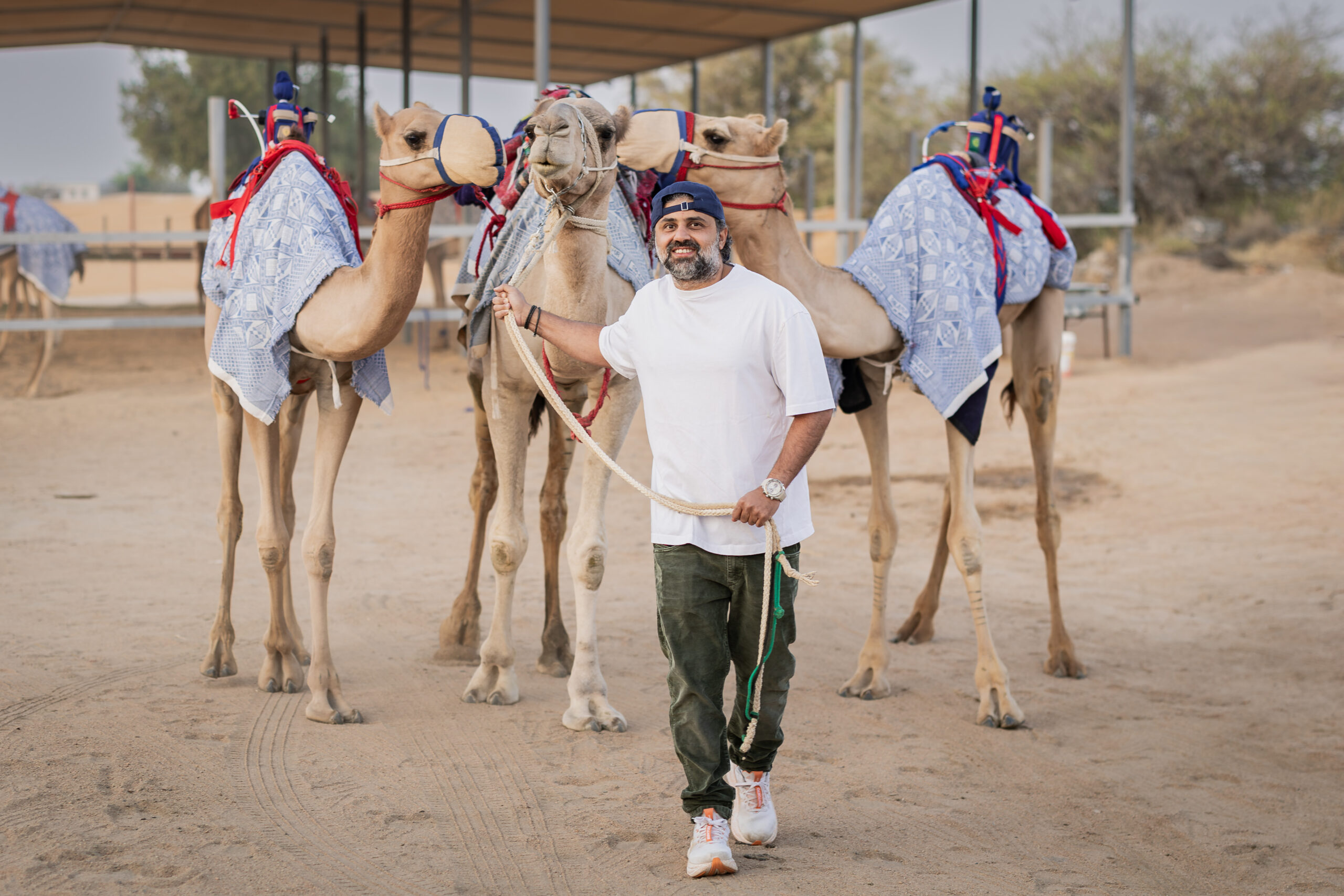
For Omar Almaeena, Co-Founder and Head of Creative at Al Haboob Camel Racing, the progress already made across the sport provides a strong foundation for what comes next.
“What the Saudi federation is doing is amazing. Every year it is growing, the fan base is growing and the races and festivals continue to develop,” says Almaeena. “It is definitely going in an amazing direction.”
Professionalism Beyond Race Day
For Almaeena, professional camel racing starts long before a camel reaches the track. Preparation, training, nutrition and organisation all form part of an increasingly structured approach to competition.
“The best trainers we compete against train professionally, feed professionally and prepare professionally,” he says. “That is the standard we look towards, and hopefully one day we can go even further.”
The sport already operates within established rules and regulations, including anti-doping requirements. Almaeena believes the biggest remaining opportunity lies not in introducing more regulation, but in using information more effectively.
As professional sport around the world becomes increasingly data-driven, Almaeena believes camel racing also has an opportunity to benefit from a more scientific approach to performance, preparation and welfare.
Data and AI Could Change Training
Data collection is one area where Almaeena sees significant potential for the next stage of professionalisation.
Blood testing, heart-rate monitoring, nutrition and fitness data can give teams a clearer picture of a camel’s condition and training progress. The opportunity lies in bringing these data points together and using AI to identify patterns and inform training decisions.
“It starts with data,” he says. “If you collect good data, then you can add AI and start developing techniques, tactics and training that are more scientific and based on that information.”
While dedicated camel-specific technologies remain limited, tools already used in other sports could provide a starting point – heart-rate monitoring used in horse training, for example, could potentially be adapted for camels and combined with bloodwork and nutritional data.
Rather than replacing the expertise of trainers and veterinarians, Almaeena sees technology as a tool that could support better decision-making, helping teams build a more complete understanding of performance, recovery and overall wellbeing.
Veterinary Science at the Core
Veterinary care already sits at the centre of Al Haboob’s training operation, with blood tests conducted every two weeks to monitor indicators related to fitness, nutrition and overall health.
“This is blood work like any athlete would do,” Almaeena explains. “Working closely with veterinarians is key to making sure our camels are in the best possible shape, not just for racing, but for their health as well.”
For Almaeena, combining veterinary expertise with better use of data could ultimately make training programmes more precise and individualised.
As data collection and performance monitoring continue to evolve, he believes welfare and performance can increasingly work hand-in-hand, with better information helping teams make more informed decisions throughout a camel’s development.
Bringing a New Generation to Camel Racing
The sport’s future will also depend on its ability to connect with younger audiences.
During the interview, Almaeena invited Wasayef Al Khaled, who works in Marketing and Operations at Al Haboob and is herself part of Gen Z, to offer the perspective of the generation the industry is trying to reach.
For Al Khaled, the issue is less about a lack of interest and more about visibility and accessibility.
“It needs to be something closer to them that they can come and watch, and see that it is really fun and cool,” she says. “There are not many things that make us know that it exists.”
Almaeena sees this as an opportunity. Research commissioned by Al Haboob found that Gen Z audiences weren’t opposed to camel racing – they were largely neutral towards it.
“When it is neutral, that is better than a no,” he says. “It tells us that no one is speaking to them in their language.”
For Almaeena, the challenge is not convincing young people to care about camel racing, but finding more effective ways to bring them into the sport through storytelling, personalities, content and experiences that feel relevant to them.
Better storytelling, he argues, can bridge that gap by presenting different sides of the sport and finding connections with the sports and culture younger audiences already follow.
One recent example is the launch of the Al Haboob run club, following the successful “Outrun the Storm” event in Los Angeles. The activation featured the first-ever human footrace on the 1.3-mile Porsche racetrack, challenging human runners to see if they could outrun the simulated sprint times of Al Haboob’s fastest racing camel, Hajma.
Looking five years ahead, Almaeena sees potential for camel racing to develop a team-based league competing across the GCC, with points, branding and events that audiences can follow throughout a season.
Such a model could create season-long narratives, team rivalries and new opportunities for fan engagement, while providing sponsors, partners and audiences with clearer storylines to follow beyond individual race meetings.
The model wouldn’t replace the heritage at the heart of camel racing – instead, he believes it could build a stronger experience around it.
“You keep the heritage, definitely. You don’t get rid of the heritage,” he says. “But you could have something like Formula One, where every race becomes an event.”
For Almaeena, that combination – preserving the sport’s identity while building professional teams, stronger storytelling and a broader event experience around racing – could represent one of the clearest opportunities for camel racing’s next chapter.
As camel racing continues to grow across the region, Almaeena believes the sport’s long-term opportunity lies in balancing tradition with innovation – protecting the heritage that has defined it for generations while embracing new ideas that can help expand its reach, relevance and appeal for future audiences.