
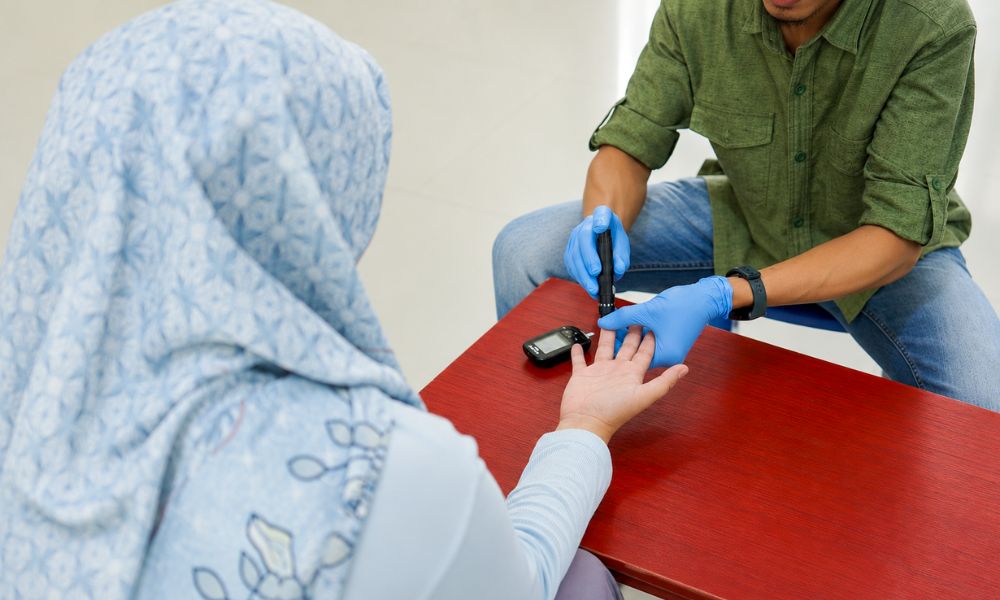
10 November 2026, Riyadh, Saudi Arabia: An estimated 2.3 million adults in Saudi Arabia are living with undiagnosed diabetes, 44% of the 5.3 million adults living with the condition. With 23.1% of adults affected, Saudi Arabia has one of the ten highest rates of diabetes in the world. Yet a new survey of adults at increased risk of type 2 diabetes in the Kingdom shows that many underestimate their own risk of the condition and are unsure how to access testing services.
Released ahead of World Diabetes Day (14 November), the research by the International Diabetes Federation (IDF) surveyed 351 adults in Saudi Arabia as part of a six-country study. It reveals a clear optimism bias. While 82% agreed that a diabetes risk check is worthwhile even when they feel healthy, only 18% believed they were likely to develop type 2 diabetes, even though every respondent reported at least two known risk factors. Seven in ten (70%) incorrectly believed that people with prediabetes – when blood glucose levels are higher than normal, but not high enough to be diagnosed as type 2 diabetes – usually experience noticeable symptoms.
Nearly half (46%) said they would not feel confident arranging a diabetes risk check. Fear of what the results might show (32%) was the most cited barrier, followed by a lack of time (24%) and not thinking they were at risk (23%). Having a personal connection to diabetes made a marked difference: 77% of those who knew several people with type 2 diabetes intended to seek a check within six months.
“In Saudi Arabia, diabetes touches most families. Three in four of the people surveyed have a relative living with type 2 diabetes, yet fewer than one in five believe it could affect them, despite having known risk factors. We need to bring checks to where people already are, at the pharmacy, during routine appointments and to the community, so that nobody waits until complications set in to find out they have diabetes,” said Dr Abdelaziz Al Humeidi, President, Saudi Charitable Association of diabetes (SCAD).
The International Diabetes Federation’s diagnosis scorecard for Saudi Arabia, based on data from the IDF Diabetes Atlas 11th edition, shows that 56% of adults with diabetes in the Kingdom have received a diagnosis, against the World Health Organization’s global target of 80% by 2030. Reaching that level would require around 1.3 million additional diagnoses, equivalent to roughly 840 every day until the end of 2030.
Diabetes-related health spending in Saudi Arabia reached US$7.3 billion in 2024. A large share of the cost comes from treating the serious complications linked to diabetes, which include heart attack, stroke, kidney failure, vision loss and lower limb amputation. A check costs a fraction of treating these complications.
“A quarter of a billion people worldwide are living with diabetes without knowing it. Our research shows that people at risk know diabetes is a problem. They just don’t believe it applies to them. Awareness of diabetes is not the same as awareness of your own risk,” said Professor Peter Schwarz, President of the International Diabetes Federation. “We cannot close the diagnosis gap if the people most in need of testing don’t know their own risk factors.”
Ahead of World Diabetes Day, the International Diabetes Federation recommends bringing testing closer to people’s lives:
As part of its World Diabetes Day activities, IDF is encouraging individuals to learn about their type 2 diabetes risk, and the action they can take to reduce it, through a simple online assessment.